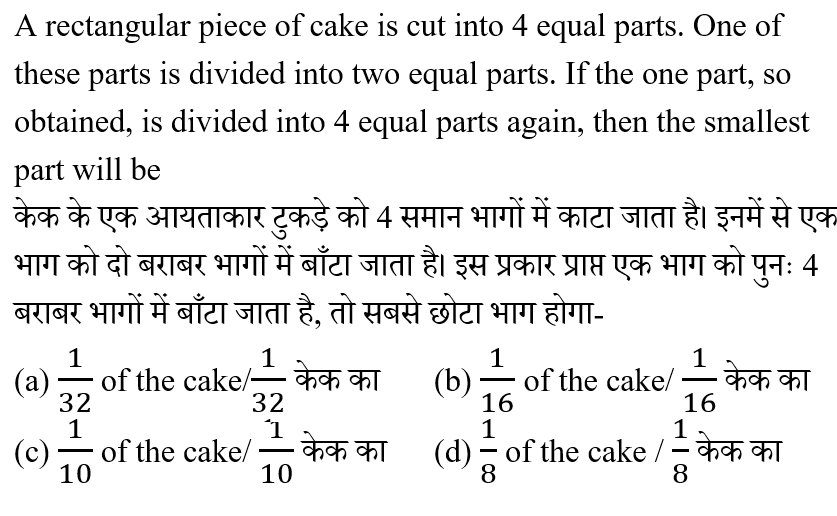
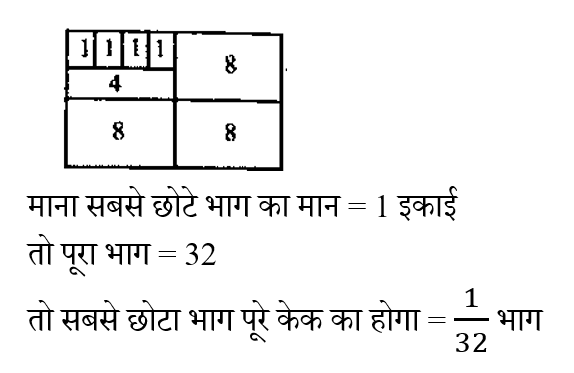
Mastery of mathematical language in the classroom can be taught by presenting problems in the following order:
कक्षा कक्ष में गणितीय भाषा में निपुणता को निम्नलिखित क्रम में समस्याओं को प्रदर्शित करने के द्वारा पढ़ाया जा सकता है:
प्रतीकात्मक भाषा → गणितीय समस्या समाधान की भाषा → गणितीयकरण स्थिति भाषा → रोजमर्रा की भाषा Symbolic language → Language of mathematical problem solving → Mathematized situation language → Everyday language
गणितीय समस्या समाधान की भाषा → गणितीयकरण स्थिति भाषा →
प्रतीकात्मक भाषा → रोजमर्रा की भाषा Language of mathematical problem solving → Mathematized situation language → Symbolic language → Everyday language
रोजमर्रा की भाषा → गणितीय स्थिति भाषा → प्रतीकात्मक भाषा Everyday language → Mathematical situation language → Symbolic language
रोजमर्रा की भाषा →गणितीयकरण स्थिति भाषा → गणितीय समस्या समाधान की भाषा → प्रतीकात्मक भाषा Everyday language →Mathematized situation language → Language of mathematical problem solving → Symbolic language
सर्वप्रथम रोज़मर्रा की भाषा का प्रयोग किया जाए, ताकि बच्चा आसानी से समझ सके उसके बाद समस्या गणितीयकरण की भाषा में प्रस्तुत की जाए और फिर गणितीय समस्या समाधान की भाषा । इन सभी चरणों के बाद समस्या को प्रतीकात्मक रूप से प्रकट करना ताकि बच्चे भी उसे प्रतीकात्मक रूप से समझ सकें ।
Question 2:
Which of the following represents the correct sequence of Van Hiele's levels of geometric thinking?
निम्नलिखित में से कौन-सा वैन हैले के ज्यामितीय चिंतन के स्तरों के सही अनुक्रम को निरूपित करता है?
Analysis, Visualization Relationship, Formal Deduction /विश्लेषण, दृश्यीकरण, संबंध की समझ, औपचारिक निगमनं
Visualization, Relationships, Analysis, Formal Deduction /दृश्यीकरण, संबंध की समझ, विश्लेषण, औपचारिक निगमन
Visualization, Analysis, Relationships, Formal Deduction / दृश्यीकरण, विश्लेषण, संबंध की समझ, औपचारिक निगमन
Relationships, Visualization, Formal Deduction, Analysis / संबंध की समझ, दृश्यीकरण, औपचारिक निगमन, विश्लेषण
वैन हैले ने ज्यामितीय चिंतन के 5 स्तर दिये है । जिसका क्रम इस प्रकार है।
(1) Level (0) ⇒ दृश्यीकरण (Visualisation)
(2) Level (1) ⇒ विश्लेषण (Analysis)
(3) Level (2) ⇒ संबंध की समझ / अनौपचारिक निगमन (Informal deduction)
(4) Level (3) ⇒ औपचारिक निगमन (Formal deduction)
(5) Level (4) ⇒ दृढ़ता (Rigor)
Question 3:
A child a mathematics class says that 5 dots, 5 sticks, 5 marbles all represent the number five. The child is referring to which aspect of the number?
एक बच्चा गणित की कक्षा में कहता है कि 5 बिन्दु, 5 लकड़ियाँ, 5कंचे सभी, संख्या पाँच को निरूपित करते हैं। बच्चा संख्या के किस पहलू की ओर संकेत कर रहा है?
Ordinality / क्रमसूचकता
Place value / स्थानीय मान
Nominality / नामिक मान को
Cardinality /गणनीयता
एक बच्चा गणित की कक्षा में कहता है । कि 5 बिन्द 5 लकड़ियाँ, 5 कंचे सभी संख्या पाँच को निरूपित करता है। बच्चा संख्या के गणनीयता पहलू की ओर संकेत कर रहा है।
Question 4:
Which of the following is not a characteristic of open-ended questions in mathematics?
निम्नलिखित में से कौन- सी गणित में खुले सिरे वाले प्रश्नों की विशेषता नहीं है?
Multiple answers / एक से अधिक उत्तर
Develops problem solving skills / समस्या समाधान कौशल को विकसित करना
Useful for secondary classes only/केवल माध्यमिक कक्षाओं के लिए उपयोगी
Trial and error / प्रयास और त्रुटि
गणित में खुले सिरे वाले प्रश्नों की विशेषता है कि ऐसे प्रश्नों का उत्तर एक से अधिक प्रकार से दिया जा सकता है क्योंकि ऐसे प्रश्न विचार पर आधारित होते हैं। जो निम्नलिखित है ।
(1) यह प्राथमिक, माध्यमिक, उच्च कक्षा सभी के लिए उपयोगी है ।
(2) गणित के प्रश्न मे एक से अधिक संभावित सही समाधान निहित होता है ।
(3) गणित के प्रश्नों को और विधियों में साल्ब करने में प्रयास एवं त्रुटि होती है।
(4) समस्या समाधान को कौशल से विकसित करना भी खुले सिरे वाले प्रश्न की विशेषता है।
(5) विद्यार्थी में रचनात्मक एवं सृजनात्मक चेतना का विकास करना ।
अतः यह केवल माध्यमिक कक्षाओं के लिए उपयोगी है। यह खुले सिरे वाले प्रश्न की विशेषता नहीं है।
Question 5:
Which of the following statements is not true about Bloom's Taxonomy for mathematics?
गणित के लिए ब्लूम टैक्सोनॉमी के बारे में निम्नलिखित में से कौन-सा कथन सत्य नहीं है?
Each domain classifies learning according to increasing levels of complexity. / प्रत्येक पक्ष जटिलता के बढ़ते स्तरों के अनुसार सीखने को वर्गीकृत करता है।
Each domain is arranged in a hierarchical structure. / प्रत्येक पक्ष पदानुक्रमित संरचना में व्यवस्थित होता है ।
Next level of learning is not a prerequisite for the lower level of learning for a particular domain. /किसी एक विशेष पक्ष के अगले स्तर को सीखने के लिए निचले स्तर को सीखना पूर्वापेक्षा नहीं है ।
Each domain is multi-tiered/प्रत्येक पक्ष बहु-स्तरीय होता है।
गणित के लिए ब्लूम टैक्सोनॉमी के बारे में किसी एक विशेष पक्ष के अगले स्तर को सीखने के लिए निचले स्तर को सीखना पूर्वापेक्षा है इसके अलावा प्रत्येक पक्ष बहुस्तरीय होता है । यह कथन सत्य है, क्योंकि ब्लूम ने सीखने के उद्देश्य को तीन पक्षों में विभाजित किया है- (1) ज्ञानात्मक पक्ष (2) भावात्मक पक्ष (3) क्रियात्मक पक्ष ।
Question 6:
d
c
a
b
Question 7:
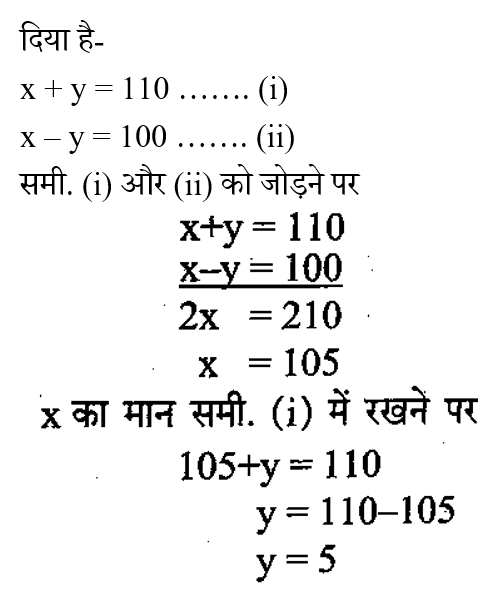
If x and y are two numbers such that their sum is 110 and difference is 100, then
यदि x और y दो संख्याएँ इस प्रकार हैं कि इनका योगफल 110 है और इनका अंतर 100 है, तो
x = 100, y = 10
x = 85, y = 15
x = 90, y = 20
x = 105, y = 5
Question 8:
What will be the number on right hand side of the next row in the following pattern?
निम्नलिखित पैटर्न में अगली पंक्ति के दायें ओर क्या संख्या होगी ?
1+3=4
1+3+5=9
1+3+5+7=16
_______=___
20
25
18
36
दिया गया पैर्टन निम्नवत् है-
1+3=4
1+3+5=9
1+3+5+7=16
1+ 3 + 5+ 7+9=25
Question 9:
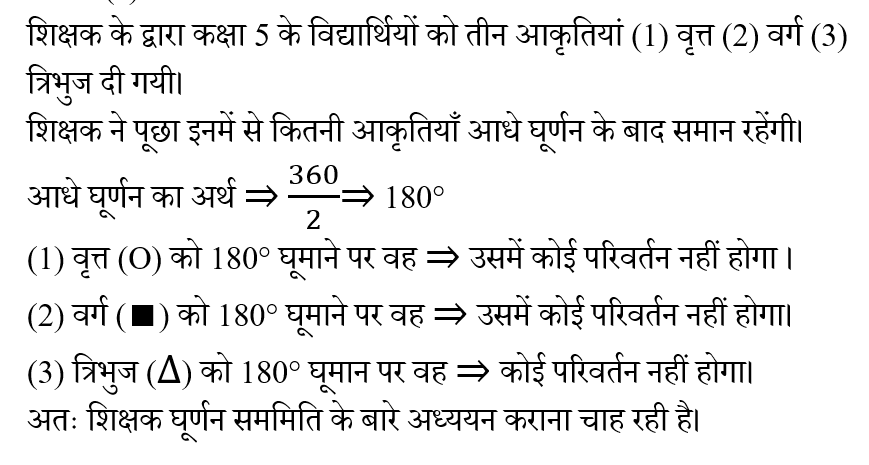
A teacher gave three figures to class 5 students - (i) Circle, (ii) Square and (iii) triangle.
She asked them, "How many figures will look same after half a turn"?
She wants her students to learn about
शिक्षक ने कक्षा 5 के विद्यार्थियों को तीन आकृतियाँ (i) वृत्त, (ii) वर्ग, और (iii) त्रिभुज दी।
उन्होंने उनसे पूछा, "इनमें से कितनी आकृतियाँ आधे घूर्णन के बाद समान रहेंगी?
वह अपने विद्यार्थियों को निम्न के बारे में अध्ययन कराना चाह रही हैं:
comparison of areas / क्षेत्रफलों की तुलना
Comparison of angles / कोणों की तुलना
Rotational symmetry / घूर्णन सममिति
Lines of symmetry / सममित रेखाएँ
Question 10:
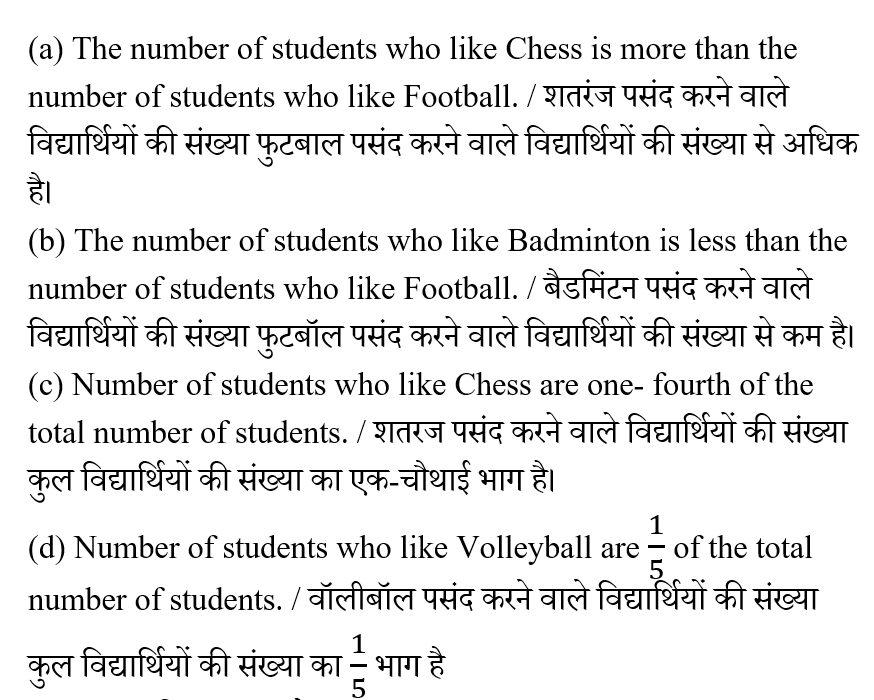
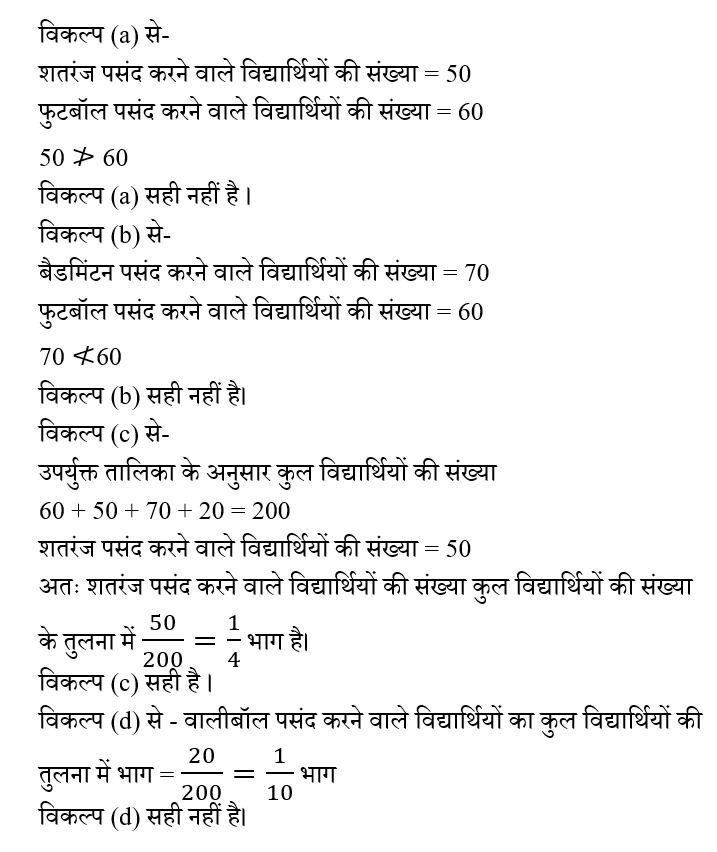
Read the data given in following table and select the correct statement:
निम्नलिखित तालिका में दिए गए आँकड़ों को पढ़िए और सही कथन का चुनाव कीजिए:
Game liked by students / Number of students /
विद्यार्थियों का पसंदीदा खेल विद्यार्थियों की संख्या