एक भारी न्यूक्लिअस स्वतः ही खंडित हो जाता है A heavy nucleus is disintegrated on its own
न्यूट्रॉन बमबारी से भारी न्यूक्लिअस खंडित होता है Heavy nucleus is disintegrated due to neutron bombardment
दो हल्के न्यूक्लाई मिल कर एक भारी न्यूक्लियस बनाते है Two light nuclei combine to form a heavy nucleus
एक हल्का न्यूक्लिअस स्वतः ही खंडित हो जाता है A light nucleus is disintegrated on its own
नाभिकीय संलयन के दौरान दो हल्के नाभिक मिलकर एक भारी नाभिक का निर्माण करते है ।
Question 2:
Insects have a network of air tubes for the exchange of gases. These are called _______.
कीटों में गैस के विनिमय के लिए वायु नलियों का एक जाल होता है इन्हें _______ कहा जाता है।
केशिकाएं Capillaries
श्वासप्रणाल Trachea
धमनियाँ Arteries
श्वासरंध्र Bronchioles
कीटों में गैस के विनिमय के लिए वायु नलियों का एक जाल होता है इन्हें श्वास प्रणाल (ट्रैकिया) कहा जाता है। कीटों के श्वसन तंत्र में श्वासनली नामक नलिकाओं के एक जाल के माध्यम से ऑक्सीजन और कार्बन डाईऑक्साइड गैसों का आदान प्रदान होता है।
Question 3:
When lead metal reacts with copper chloride solution,
जब लेड धातु कॉपर क्लोराइड के विलयन से अभिक्रिया करती है, तब
कोई अभिक्रिया नहीं होती है। No reaction takes place.
लेड कॉपर निर्मित होता है Lead copper is formed
जल निर्मित होता है। Water is formed.
लेड क्लोराइड निर्मित होता है । Lead chloride is formed.
Pb (s) + CuCl2(aq) → PbCl2(aq) + Cu (s)
(कॉपर क्लोराइड) (लेड क्लोराइड)
इस प्रकार जब लेड धातु की कॉपर क्लोराइड के विलयन से अभिक्रिया करायी जाती है, तो लेड क्लोराइड निर्मित होता है क्योंकि लेड, कापर की अपेक्षा अधिक अभिक्रियाशील तत्व है इसलिए कॉपर को उसके यौगिक से विस्थापित कर देता है।
Question 4:
The contraction and expansion of the walls of the food pipe are called _______ movements.
भोजन नली की दीवारों के संकुचन और प्रसरण को _______गति कहा जाता है।
क्रमाकुंचन Peristalsis
दोलनी Oscillatory
जठर-संबंधी Gastric
अनुशिथिलन Diastolic
भोजन नली की दीवारों के संकुचन और प्रसरण को क्रमाकुंचन गति कहा जाता है । मुख गुहा से लार से सना हुआ भोजन निग द्वार (Gullet) के द्वारा ग्रासनली में पहुँचता है, ग्रासनली एक लम्बी नली होती है, जो आमाशय में खुलती है। इसकी दीवार पेशीय या संकुचनशील होती है भोजन के पहुँचते ही ग्रासनली की दीवार में तुरंग की तरह संकुचन या सिकुड़न और शिथिलन या फैलाव शुरू होता है। जिसे क्रमाकुंचन कहते है ।
Question 5:
71 The electronic configurations of three elements X, Y and Z are (2,8,7), (2,8,2) and (2,8,8) respectively. Then element Z is a ...........
तीन तत्वों X, Y और Z के इलेक्ट्रॉनिक विन्यास 71 क्रमशः (2,8,7), (2,8,2) और (2,8,8) हैं, तो तत्व Z एक ...........है।
उपधातु Metalloid
अधातु Non-metal
धातु Metal
निष्क्रिय गैस Inert gas
तीन तत्वों X, Y और Z के इलेक्ट्रॉनिक्स विन्यास के आधार पर-
X = 2, 8, 7 = क्लोरीन
Y = 2, 8, 2 = मैग्नीशियम
Z = 2, 8, 8 = आर्गन
Z के इलेक्ट्रॉनिक्स विन्यास से ही पता चलता है कि यह निष्क्रिय गैस (आर्गन) है। निष्क्रिय गैस अथवा अक्रिय गैसे उन गैसों को कहा जाता है जो साधारणतः रासायनिक अभिक्रिया में भाग नहीं लेती और सदा मुक्त अवस्था में पायी जाती हैं। इनमें हीलियम, निऑन, आर्गन, क्रिप्टॉन, जीनॉन और रेडान सम्मिलित है। इनमे से रेडॉन रेडियो-सक्रिय हैं ये उत्कृष्ट गैसों के नाम से भी प्रसिद्ध हैं ।
Question 6:
In human kidney, which of the following substances are selectively reabsorbed from the initial filtrate by the tubular portion of the nephron?
मानव वृक्क में वृक्काणु (nephron) के नलिकानुमा भाग द्वारा आरंभिक निस्यंद से इनमें से किन पदार्थों का चयनात्मक पुनः अवशोषण कर लिया जाता है?
ग्लूकोज, जल, लवण और अमीनों अम्ल Glucose, water, salt and amino acid
लवण, ग्लूकोज, वसा और जल Salt, glucose, fat and water
ग्लूकोज, जल, अमीनों अम्ल और प्रोटीन Glucose, water, amino acids and protein
जल, ग्लूकोज, लवण और प्रोटीन Water, glucose, salt and protein
मानव वृक्क में वृक्काणु (nephron ) के नलिकानुमा भाग द्वारा आरंभिक निस्यंद से इनमें से ग्लूकोज, जल, लवण और अमीनों अम्ल का चयनात्मक पुनः अवशोषण कर लिया जाता है।
Question 7:
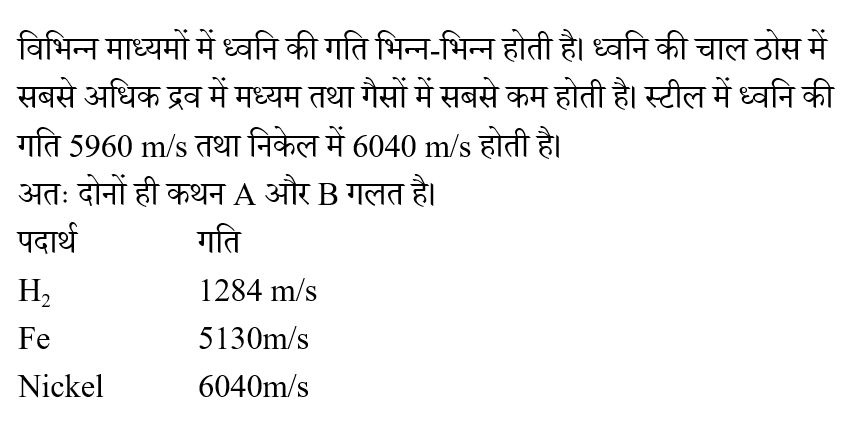
Which of the following statements about the speed of sound in different mediums at 25°C is/are correct?
25°C पर विभिन्न माध्यमों में ध्वनि की गति के बारे में निम्नलिखित में कौन सा/से कथन सत्य है/हैं?
A. स्टील में ध्वनि की गति 5960 cm/s है। The speed of sound in steel is 5960 cm/s.
B. निकेल में ध्वनि की गति 6240 m/s है। The speed of sound in nickel is 6240 m/s.
न तो A और B न सही है। Neither A nor B is correct.
A और B दोनों सही है Both A and B are correct
केवल B सही है ।Only B is correct.
केवल A सही है। Only A is correct.
Question 8:
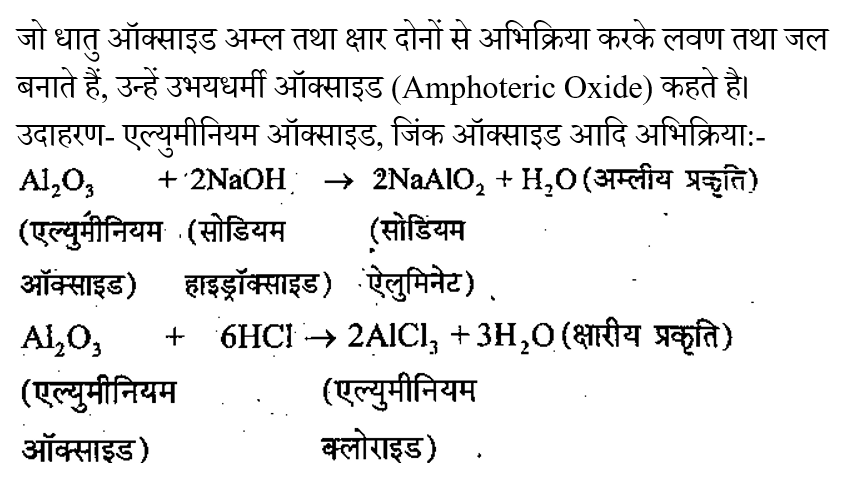
Which metal oxide is an amphoteric oxide?
कौन सा धातु ऑक्साइड एक उभयधर्मी (एम्फोर्टरिक) ऑक्साइड है?
पोटैशियम Potassium
सोडियम Sodium
आयरन Iron
एल्युमीनियम Aluminium
Question 9:
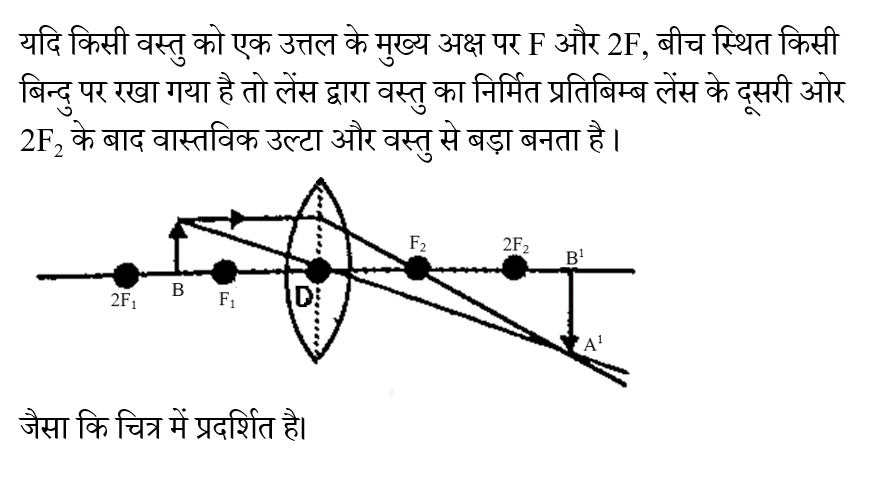
An object is placed at a point between F1 and 2F1 on the principal axis of a convex lens.
किसी वस्तु को एक उत्तल लेंस के मुख्य अक्ष पर F1 और 2F1 के बीच स्थित किसी बिन्दु पर रखा गया है।
Its image formed will be _______.
इसका निर्मित प्रतिबिंब _______ होगा।
आभासी और समान आकार का Virtual and of the same size
आभासी और बड़ा Virtual and enlarged
वास्तविक और बड़ा Real and enlarged
वास्तविक और समान आकार का Real and of the same size
Question 10:
At what temperature water can exist in both liquid and solid state?
किस तापमान पर पानी, तरल एवं ठोस दोनों स्थितियों में विद्यमान हो सकता है?
- 100°C
-1°C
0°C
100°C
0°C पर जल तरल एवं ठोस अर्थात बर्फ की अवस्था में विद्यमान हो सकता है। 0°C ताप पानी का हिमांक बिन्दु होता है जिस पर पानी बर्फ में बदलता है । 100°C ताप पानी का क्वथनांक बिन्दु होता है जिस पर पानी भाप में बदलता है।