Question 1: 
Question 2: 
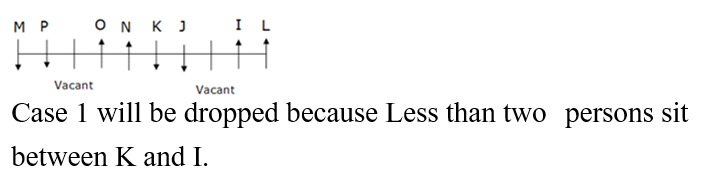
Question 3: 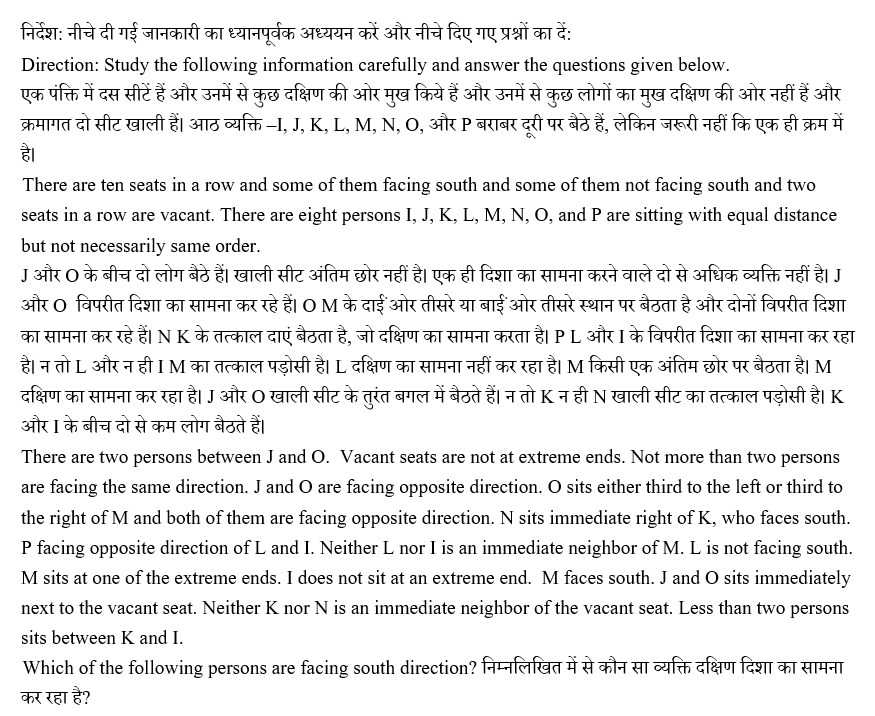
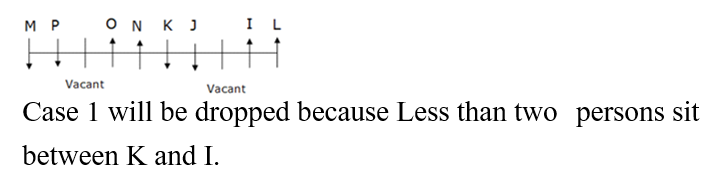
Question 4: 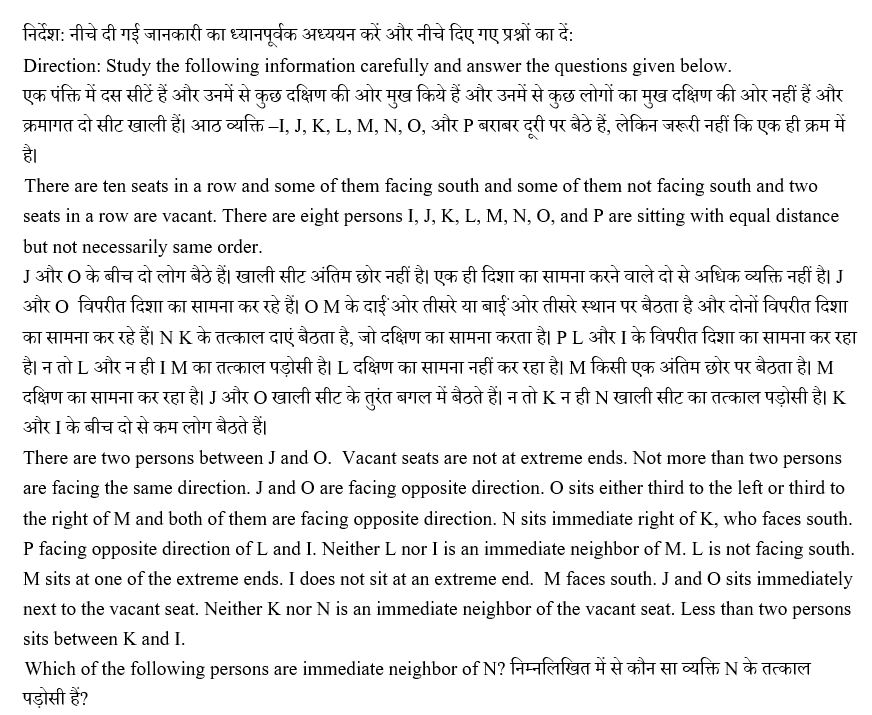
Question 5: 
Question 6:
निर्देश: निम्नलिखित प्रश्नों में, $, @,%, और # प्रतीकों का उपयोग निम्न अर्थों के साथ किया जाता है:
Directions: In the following questions, the symbols $, @, %, & and # are used with the following meanings as illustrated below:
"A @ B" को "A या तो B से बड़ा या बराबर है" के रूप में कोड किया गया है।
"A # B" को "A, B से बड़ा है" के रूप में कोड किया गया है।
"A% B" को "A, B से छोटा है" के रूप में कोड किया गया है।
"A × B" को "A न तो B से बड़ा या छोटा है" के रूप में कोड किया गया है।
"A & B" को "A, B से बड़ा नहीं है" के रूप में कोड किया गया है।
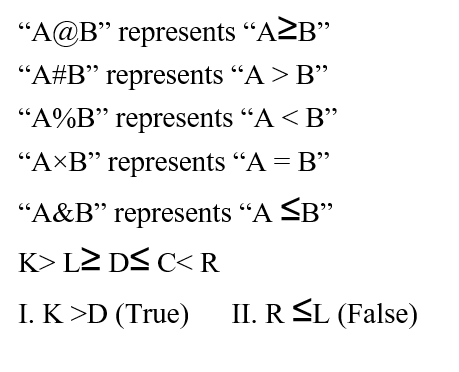
(1) “A@B” coded as “A is either greater or equal to B”
(2) “A#B” coded as “A is greater than B”
(3) “A%B” coded as “A is smaller than to B”
(4) “A×B” coded as “A is neither greater nor smaller than B”
(5) “A&B” coded as “A neither greater than B”
निम्नलिखित में से प्रत्येक प्रश्न में, दिए गए कथनों को सत्य मानते हुए, तय करें कि नीचे दिए गए दो निष्कर्ष I और II में से कौन सा निष्कर्ष निश्चित रूप से सत्य है दिया हुआ–
In each of the following questions, assuming the given statements to be true, find out which of the two conclusions I and II given below them is/are definitely true.
Given-
(1) Conclusion I follow निष्कर्ष I अनुसरण करता है
(2) Conclusion II follows निष्कर्ष II अनुसरण करता है
(3) Either Conclusion I or Conclusion II follows या तो निष्कर्ष I या निष्कर्ष II अनुसरण करता है
(4) Neither Conclusion I nor Conclusion II follows ना तो निष्कर्ष I और ना ही निष्कर्ष II अनुसरण करता है
(5) Both conclusion I and conclusion II follows दोनों निष्कर्ष I और निष्कर्ष II अनुसरण करते है
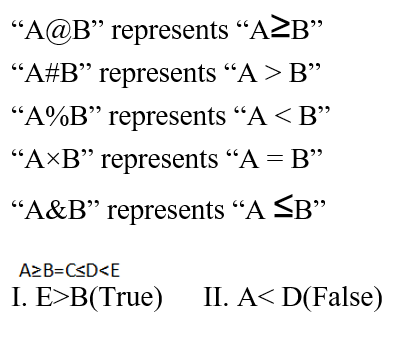
Statements: कथन: A@B×C,C&D%E
Conclusions: निष्कर्ष:
I. E#B
II. A%D
Question 7:
निर्देश: निम्नलिखित प्रश्नों में, $, @,%, और # प्रतीकों का उपयोग निम्न अर्थों के साथ किया जाता है:
Directions: In the following questions, the symbols $, @, %, & and # are used with the following meanings as illustrated below:
"A @ B" को "A या तो B से बड़ा या बराबर है" के रूप में कोड किया गया है।
"A # B" को "A, B से बड़ा है" के रूप में कोड किया गया है।
"A% B" को "A, B से छोटा है" के रूप में कोड किया गया है।
"A × B" को "A न तो B से बड़ा या छोटा है" के रूप में कोड किया गया है।
"A & B" को "A, B से बड़ा नहीं है" के रूप में कोड किया गया है।
(1) “A@B” coded as “A is either greater or equal to B”
(2) “A#B” coded as “A is greater than B”
(3) “A%B” coded as “A is smaller than to B”
(4) “A×B” coded as “A is neither greater nor smaller than B”
(5) “A&B” coded as “A neither greater than B”
निम्नलिखित में से प्रत्येक प्रश्न में, दिए गए कथनों को सत्य मानते हुए, तय करें कि नीचे दिए गए दो निष्कर्ष I और II में से कौन सा निष्कर्ष निश्चित रूप से सत्य है दिया हुआ–
In each of the following questions, assuming the given statements to be true, find out which of the two conclusions I and II given below them is/are definitely true.
Given-
(1) Conclusion I follow निष्कर्ष I अनुसरण करता है
(2) Conclusion II follows निष्कर्ष II अनुसरण करता है
(3) Either Conclusion I or Conclusion II follows या तो निष्कर्ष I या निष्कर्ष II अनुसरण करता है
(4) Neither Conclusion I nor Conclusion II follows ना तो निष्कर्ष I और ना ही निष्कर्ष II अनुसरण करता है
(5) Both conclusion I and conclusion II follows दोनों निष्कर्ष I और निष्कर्ष II अनुसरण करते है
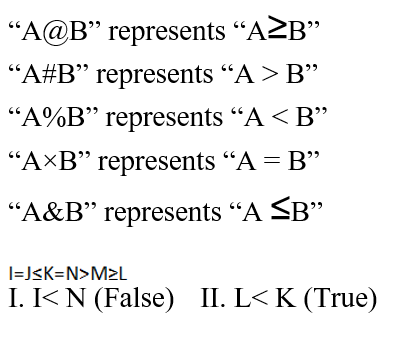
Statements: कथन: I×J&K,N×K#M@L
Conclusions: निष्कर्ष:
I. I%N
II. L%K
Question 8:
निर्देश: निम्नलिखित प्रश्नों में, $, @,%, और # प्रतीकों का उपयोग निम्न अर्थों के साथ किया जाता है:
Directions: In the following questions, the symbols $, @, %, & and # are used with the following meanings as illustrated below:
"A @ B" को "A या तो B से बड़ा या बराबर है" के रूप में कोड किया गया है।
"A # B" को "A, B से बड़ा है" के रूप में कोड किया गया है।
"A% B" को "A, B से छोटा है" के रूप में कोड किया गया है।
"A × B" को "A न तो B से बड़ा या छोटा है" के रूप में कोड किया गया है।
"A & B" को "A, B से बड़ा नहीं है" के रूप में कोड किया गया है।
(1) “A@B” coded as “A is either greater or equal to B”
(2) “A#B” coded as “A is greater than B”
(3) “A%B” coded as “A is smaller than to B”
(4) “A×B” coded as “A is neither greater nor smaller than B”
(5) “A&B” coded as “A neither greater than B”
निम्नलिखित में से प्रत्येक प्रश्न में, दिए गए कथनों को सत्य मानते हुए, तय करें कि नीचे दिए गए दो निष्कर्ष I और II में से कौन सा निष्कर्ष निश्चित रूप से सत्य है दिया हुआ–
In each of the following questions, assuming the given statements to be true, find out which of the two conclusions I and II given below them is/are definitely true.
Given-
(1) Conclusion I follow निष्कर्ष I अनुसरण करता है
(2) Conclusion II follows निष्कर्ष II अनुसरण करता है
(3) Either Conclusion I or Conclusion II follows या तो निष्कर्ष I या निष्कर्ष II अनुसरण करता है
(4) Neither Conclusion I nor Conclusion II follows ना तो निष्कर्ष I और ना ही निष्कर्ष II अनुसरण करता है
(5) Both conclusion I and conclusion II follows दोनों निष्कर्ष I और निष्कर्ष II अनुसरण करते है
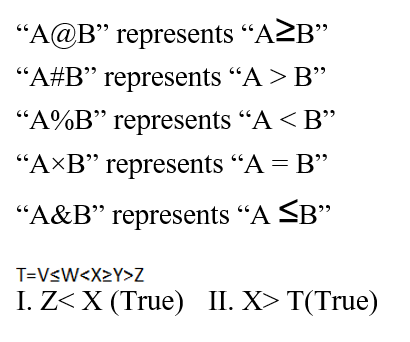
Statements: कथन: X@Y#Z, T×V&W%X
Conclusions: निष्कर्ष:
I. Z%X
II. X#T
Question 9:
निर्देश: निम्नलिखित प्रश्नों में, $, @,%, और # प्रतीकों का उपयोग निम्न अर्थों के साथ किया जाता है:
Directions: In the following questions, the symbols $, @, %, & and # are used with the following meanings as illustrated below:
"A @ B" को "A या तो B से बड़ा या बराबर है" के रूप में कोड किया गया है।
"A # B" को "A, B से बड़ा है" के रूप में कोड किया गया है।
"A% B" को "A, B से छोटा है" के रूप में कोड किया गया है।
"A × B" को "A न तो B से बड़ा या छोटा है" के रूप में कोड किया गया है।
"A & B" को "A, B से बड़ा नहीं है" के रूप में कोड किया गया है।
(1) “A@B” coded as “A is either greater or equal to B”
(2) “A#B” coded as “A is greater than B”
(3) “A%B” coded as “A is smaller than to B”
(4) “A×B” coded as “A is neither greater nor smaller than B”
(5) “A&B” coded as “A neither greater than B”
निम्नलिखित में से प्रत्येक प्रश्न में, दिए गए कथनों को सत्य मानते हुए, तय करें कि नीचे दिए गए दो निष्कर्ष I और II में से कौन सा निष्कर्ष निश्चित रूप से सत्य है दिया हुआ–
In each of the following questions, assuming the given statements to be true, find out which of the two conclusions I and II given below them is/are definitely true.
Given-
(1) Conclusion I follow निष्कर्ष I अनुसरण करता है
(2) Conclusion II follows निष्कर्ष II अनुसरण करता है
(3) Either Conclusion I or Conclusion II follows या तो निष्कर्ष I या निष्कर्ष II अनुसरण करता है
(4) Neither Conclusion I nor Conclusion II follows ना तो निष्कर्ष I और ना ही निष्कर्ष II अनुसरण करता है
(5) Both conclusion I and conclusion II follows दोनों निष्कर्ष I और निष्कर्ष II अनुसरण करते है
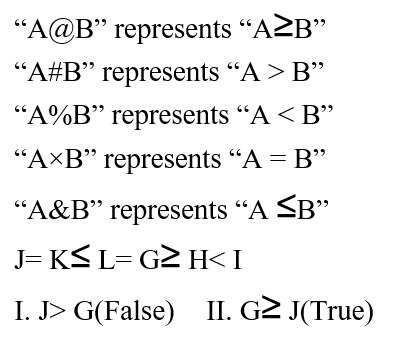
Statements: कथन: G@H%I, J×K&L×G
Conclusions: निष्कर्ष: I. J#G II. G@J
Question 10:
निर्देश: निम्नलिखित प्रश्नों में, $, @,%, और # प्रतीकों का उपयोग निम्न अर्थों के साथ किया जाता है:
Directions: In the following questions, the symbols $, @, %, & and # are used with the following meanings as illustrated below:
"A @ B" को "A या तो B से बड़ा या बराबर है" के रूप में कोड किया गया है।
"A # B" को "A, B से बड़ा है" के रूप में कोड किया गया है।
"A% B" को "A, B से छोटा है" के रूप में कोड किया गया है।
"A × B" को "A न तो B से बड़ा या छोटा है" के रूप में कोड किया गया है।
"A & B" को "A, B से बड़ा नहीं है" के रूप में कोड किया गया है।
(1) “A@B” coded as “A is either greater or equal to B”
(2) “A#B” coded as “A is greater than B”
(3) “A%B” coded as “A is smaller than to B”
(4) “A×B” coded as “A is neither greater nor smaller than B”
(5) “A&B” coded as “A neither greater than B”
निम्नलिखित में से प्रत्येक प्रश्न में, दिए गए कथनों को सत्य मानते हुए, तय करें कि नीचे दिए गए दो निष्कर्ष I और II में से कौन सा निष्कर्ष निश्चित रूप से सत्य है दिया हुआ–
In each of the following questions, assuming the given statements to be true, find out which of the two conclusions I and II given below them is/are definitely true.
Given-
(1) Conclusion I follow निष्कर्ष I अनुसरण करता है
(2) Conclusion II follows निष्कर्ष II अनुसरण करता है
(3) Either Conclusion I or Conclusion II follows या तो निष्कर्ष I या निष्कर्ष II अनुसरण करता है
(4) Neither Conclusion I nor Conclusion II follows ना तो निष्कर्ष I और ना ही निष्कर्ष II अनुसरण करता है
(5) Both conclusion I and conclusion II follows दोनों निष्कर्ष I और निष्कर्ष II अनुसरण करते है
Statements: कथन: D&C%R, K#L@D
Conclusions: निष्कर्ष:
I. K#D
II. R&L