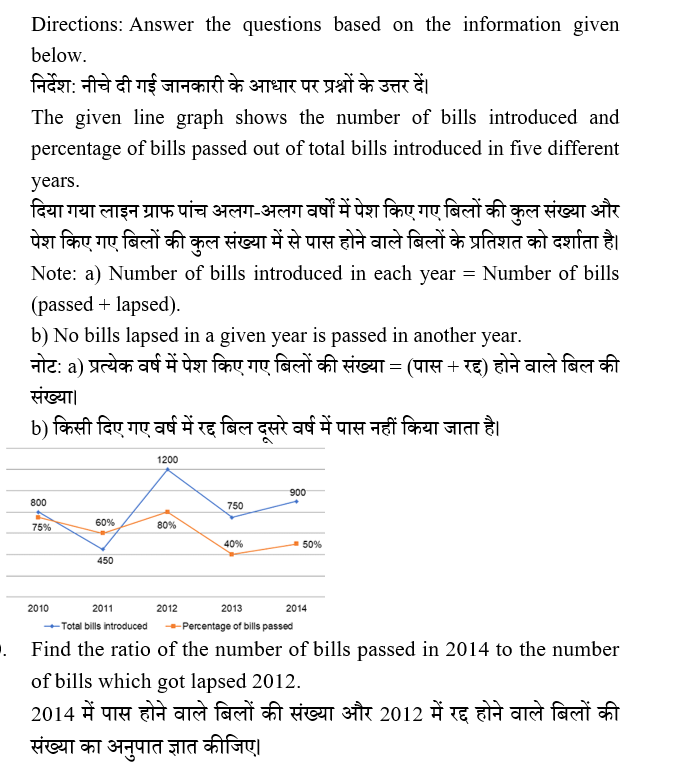
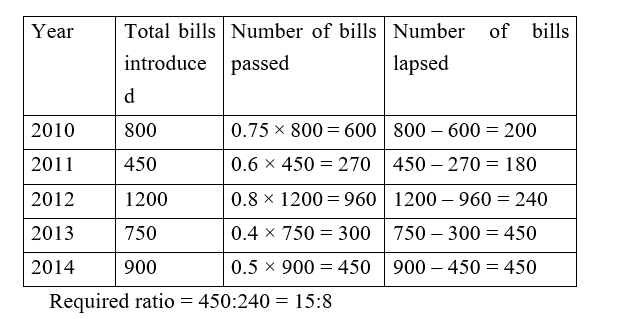
Question 1:
Directions: Answer the questions based on the information given below.
निर्देश: नीचे दी गई जानकारी के आधार पर प्रश्नों के उत्तर दें।
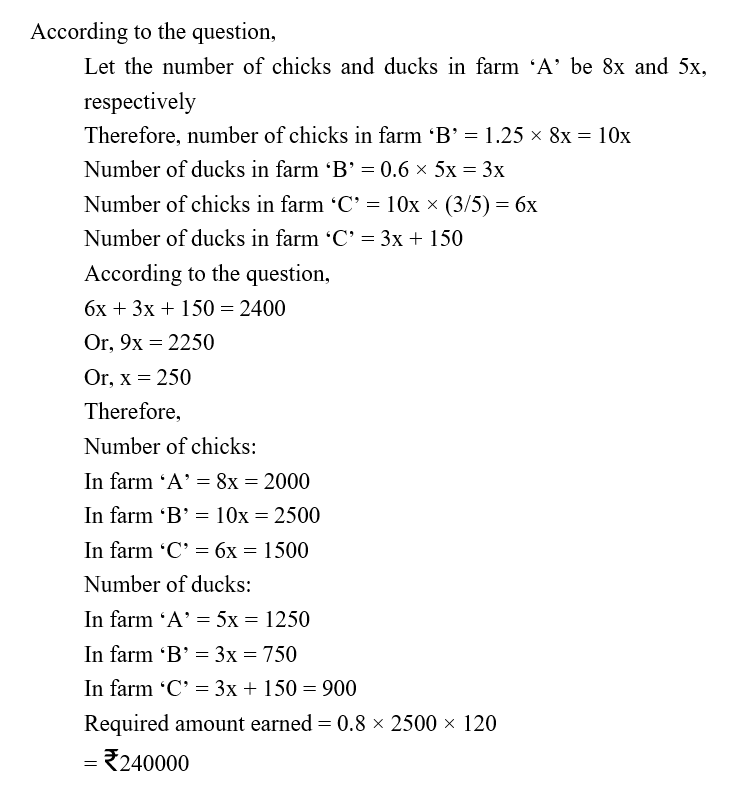
The given data is about number of chicks and ducks in three different farms. The ratio of the number of chicks and ducks in farm ‘A’ is 8:5, respectively. The number of chicks and ducks in farm ‘B’ is 25% more and 40% less, respectively than that in farm ‘A’. The ratio of the number of chicks in farms ‘B’ and ‘C’ is 5:3, respectively. The number of ducks in farm ‘C’ is 150 more than that in farm ‘B’. Number of (chicks + ducks) in farm ‘C’ is 2400.
दी गई जानकारी तीन अलग-अलग फार्म में चूजों और बत्तखों की संख्या के बारे में है।फार्म ‘A’ में चूजों और बत्तखों की संख्या का अनुपात क्रमशः 8:5 है। फार्म ‘B’ में चूजों और बत्तखों की संख्या फार्म ‘A’ की तुलना में क्रमशः 25% अधिक और 40% कम है। फार्म ‘B’ और ‘C’ में चूजों की संख्या का अनुपात क्रमशः 5:3 है। फार्म 'C' में बत्तखों की संख्या फार्म ‘B’ की तुलना में 150 अधिक है। फार्म 'C' में (चूजे + बत्तख) की संख्या 2400 है।
The owner of farm ‘B’ sold each chick for ₹120. Find total amount earned by the owner after selling 80% of chicks in farm ‘B’.
फार्म ‘B’ के मालिक ने प्रत्येक चूजे को रु. 120 में बेचा। फार्म ‘B’ में 80% चूजों को बेचने के बाद मालिक द्वारा अर्जित कुल राशि ज्ञात कीजिए।
Question 2:
Directions: Answer the questions based on the information given below.
निर्देश: नीचे दी गई जानकारी के आधार पर प्रश्नों के उत्तर दें।
The given data is about number of chicks and ducks in three different farms. The ratio of the number of chicks and ducks in farm ‘A’ is 8:5, respectively. The number of chicks and ducks in farm ‘B’ is 25% more and 40% less, respectively than that in farm ‘A’. The ratio of the number of chicks in farms ‘B’ and ‘C’ is 5:3, respectively. The number of ducks in farm ‘C’ is 150 more than that in farm ‘B’. Number of (chicks + ducks) in farm ‘C’ is 2400.
दी गई जानकारी तीन अलग-अलग फार्म में चूजों और बत्तखों की संख्या के बारे में है।फार्म ‘A’ में चूजों और बत्तखों की संख्या का अनुपात क्रमशः 8:5 है। फार्म ‘B’ में चूजों और बत्तखों की संख्या फार्म ‘A’ की तुलना में क्रमशः 25% अधिक और 40% कम है। फार्म ‘B’ और ‘C’ में चूजों की संख्या का अनुपात क्रमशः 5:3 है। फार्म 'C' में बत्तखों की संख्या फार्म ‘B’ की तुलना में 150 अधिक है। फार्म 'C' में (चूजे + बत्तख) की संख्या 2400 है।
Find ratio of number of chicks in farm ‘A’ and number of ducks in farm ‘C’.
फार्म ‘A’ में चूजों की संख्या और फार्म ‘C’ में बत्तखों की संख्या का अनुपात ज्ञात कीजिए।

Question 3:
Directions: Answer the questions based on the information given below.
निर्देश: नीचे दी गई जानकारी के आधार पर प्रश्नों के उत्तर दें।
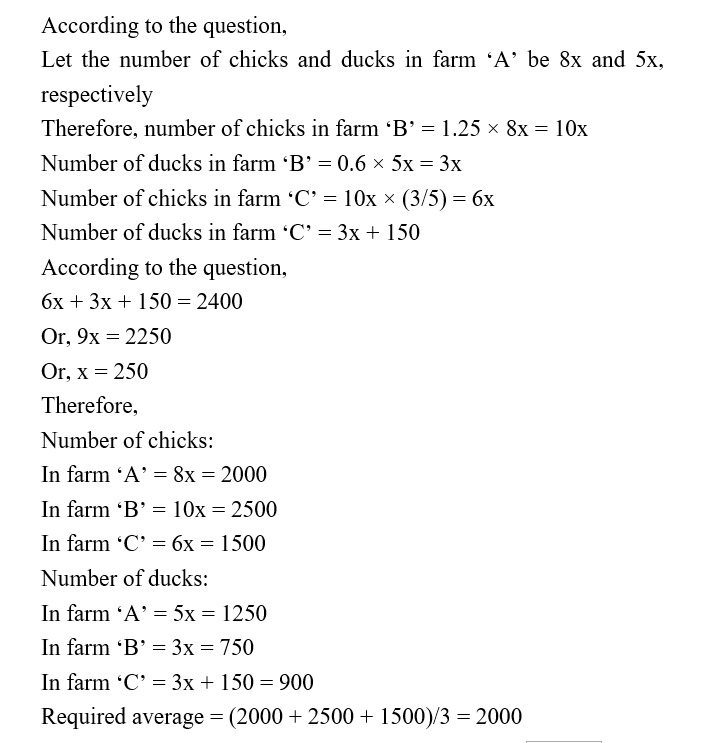
The given data is about number of chicks and ducks in three different farms. The ratio of the number of chicks and ducks in farm ‘A’ is 8:5, respectively. The number of chicks and ducks in farm ‘B’ is 25% more and 40% less, respectively than that in farm ‘A’. The ratio of the number of chicks in farms ‘B’ and ‘C’ is 5:3, respectively. The number of ducks in farm ‘C’ is 150 more than that in farm ‘B’. Number of (chicks + ducks) in farm ‘C’ is 2400.
दी गई जानकारी तीन अलग-अलग फार्म में चूजों और बत्तखों की संख्या के बारे में है।फार्म ‘A’ में चूजों और बत्तखों की संख्या का अनुपात क्रमशः 8:5 है। फार्म ‘B’ में चूजों और बत्तखों की संख्या फार्म ‘A’ की तुलना में क्रमशः 25% अधिक और 40% कम है। फार्म ‘B’ और ‘C’ में चूजों की संख्या का अनुपात क्रमशः 5:3 है। फार्म 'C' में बत्तखों की संख्या फार्म ‘B’ की तुलना में 150 अधिक है। फार्म 'C' में (चूजे + बत्तख) की संख्या 2400 है।
Find the average number of chicks in given three farms.
दिए गए तीनों फार्म में चूजों की औसत संख्या ज्ञात कीजिए।
Question 4:
Directions: Answer the questions based on the information given below.
निर्देश: नीचे दी गई जानकारी के आधार पर प्रश्नों के उत्तर दें।
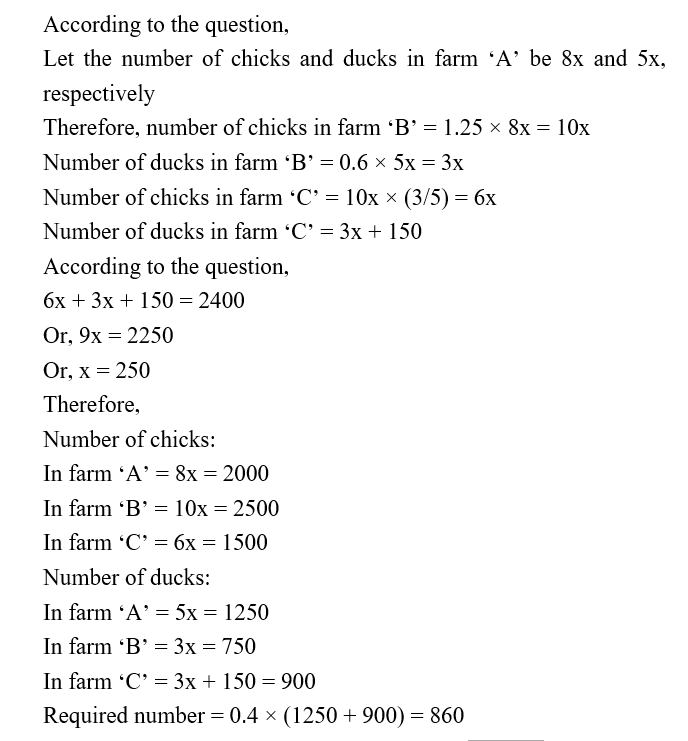
The given data is about number of chicks and ducks in three different farms. The ratio of the number of chicks and ducks in farm ‘A’ is 8:5, respectively. The number of chicks and ducks in farm ‘B’ is 25% more and 40% less, respectively than that in farm ‘A’. The ratio of the number of chicks in farms ‘B’ and ‘C’ is 5:3, respectively. The number of ducks in farm ‘C’ is 150 more than that in farm ‘B’. Number of (chicks + ducks) in farm ‘C’ is 2400.
दी गई जानकारी तीन अलग-अलग फार्म में चूजों और बत्तखों की संख्या के बारे में है।फार्म ‘A’ में चूजों और बत्तखों की संख्या का अनुपात क्रमशः 8:5 है। फार्म ‘B’ में चूजों और बत्तखों की संख्या फार्म ‘A’ की तुलना में क्रमशः 25% अधिक और 40% कम है। फार्म ‘B’ और ‘C’ में चूजों की संख्या का अनुपात क्रमशः 5:3 है। फार्म 'C' में बत्तखों की संख्या फार्म ‘B’ की तुलना में 150 अधिक है। फार्म 'C' में (चूजे + बत्तख)
Find 40% of number of ducks in farms ‘A’ and ‘C’ together.
फार्म ‘A’ और ‘C’ में बत्तखों की कुल संख्या का 40% ज्ञात कीजिए।
की संख्या 2400 है।
Question 5: 
Question 6: 
Question 7: 
Question 8: 
Question 9: 
Question 10: