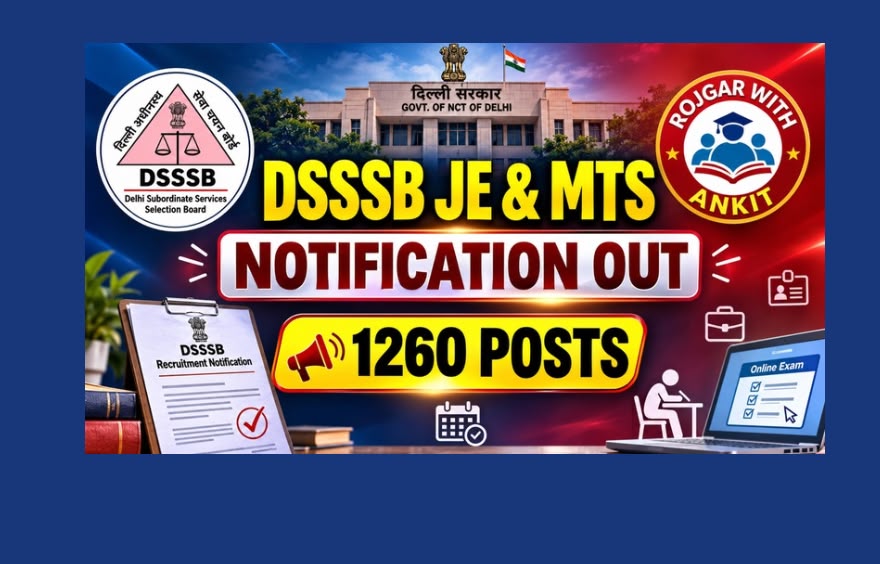
Delhi Subordinate Services Selection Board (DSSSB) ने Junior Engineer (Electric/Electrical) और Multi-Tasking Staff (MTS) Recruitment 2026 के लिए Official Notification किया है। Advertisement No. 06/2026 के तहत Government of NCT of Delhi के विभिन्न Departments, Autonomous Bodies और Local Bodies में कुल 1,260 Vacancies के लिए Online Applications निकाले गए हैं। इस Recruitment में Junior Engineer (Electrical), Multi-Tasking Staff (General Duty), MTS-Aaya (Female) और अन्य MTS Posts शामिल हैं।
Click Here To Download Notification
DSSSB Recruitment 2026 के लिए Online Application Process 12 November 2026 से शुरू होगी और 11 December 2026 तक चलेगी। Eligible Candidates DSSSB की Official Website dsssbonline.nic.in पर जाकर Application Submit कर सकते हैं।
DSSSB Recruitment 2026 : Overview
DSSSB Recruitment 2026 से संबंधित मुख्य जानकारी का Overview नीचे दिया गया है। Candidates इस Table के माध्यम से Recruitment की सभी Important Details Check कर सकते हैं।
| Particulars | Details |
| Organisation Name | Delhi Subordinate Services Selection Board (DSSSB) |
| Advertisement Number | 06/2026 |
| Post Name |
|
| Total Vacancies | 1260 |
| Junior Engineer Vacancies | 185 |
| MTS Vacancies | 1075 |
| JE Post Code | 809/26 |
| MTS Post Code | 810/26 |
| Age Limit |
|
| Application Fee | ₹100; Women/SC/ST/PwBD/Eligible ESM: Nil |
| Salary / Pay Scale | ₹18,000–₹1,51,100 (Post-wise Pay Levels) |
| Selection Process |
|
| Application Mode | Online |
| Official Website | dsssbonline.nic.in |
DSSSB Recruitment 2026: Important Dates
DSSSB Recruitment 2026 के लिए Online Application Start Date और Last Date Official Notification में निर्धारित कर दी गई हैं। Candidates को नीचे दी गई Table के अनुसार अपनी Application Process समय पर पूरी करनी होगी।
| Events | Important Dates |
| Notification Release Date | 06 November 2026 |
| Online Application Start Date | 12 November 2026 (12:00 Noon) |
| Online Application Last Date | 11 December 2026 (11:59 PM) |
| Eligibility Cut-off Date | 11 December 2026 |
| Examination Date | To Be Announced |
| Admit Card Release Date | |
| Result Date |
DSSSB Recruitment 2026: Vacancy Details
DSSSB Recruitment 2026 के अंतर्गत Junior Engineer (Electrical) के लिए 185 Vacancies और Multi-Tasking Staff के लिए 1,260 Vacancies निर्धारित की गई हैं। Department-wise Vacancy Details नीचे दी गई हैं।
Junior Engineer (Electrical) Vacancy Details
| Department | UR | OBC | SC | ST | EWS | Total |
| New Delhi Municipal Council | 40 | 8 | 8 | 5 | 6 | 67 |
| Delhi Agricultural Marketing Board | 3 | 0 | 0 | 0 | 0 | 3 |
| Municipal Corporation of Delhi | 12 | 7 | 4 | 2 | 1 | 26 |
| Delhi Transco Limited | 38 | 15 | 9 | 5 | 8 | 75 |
| Delhi Urban Shelter Improvement Board | 5 | 3 | 2 | 2 | 2 | 14 |
| Total | 98 | 33 | 23 | 14 | 17 | 185 |
Multi-Tasking Staff Vacancy Details
| Department / Post | UR | OBC | SC | ST | EWS | Total |
| Directorate of Education – MTS General Duty | 305 | 205 | 114 | 57 | 76 | 757 |
| Directorate of Education – MTS Aaya (Female) | 97 | 64 | 36 | 18 | 24 | 239 |
| Department of Trade & Taxes | 9 | 12 | 0 | 2 | 3 | 26 |
| Delhi Urban Shelter Improvement Board | 9 | 5 | 3 | 1 | 2 | 20 |
| Directorate of Higher Education | 3 | 0 | 0 | 0 | 0 | 3 |
| Weights and Measures Department | 10 | 5 | 2 | 1 | 1 | 19 |
| Principal Accounts Office | 1 | 0 | 0 | 1 | 0 | 2 |
| Land & Building Department | 3 | 1 | 3 | 0 | 0 | 7 |
| Office of the Chief Electoral Officer | 2 | 0 | 0 | 0 | 0 | 2 |
| Total | 439 | 292 | 161 | 80 | 103 | 1,075 |
DSSSB Recruitment 2026: Eligibility
DSSSB Recruitment 2026 के लिए Junior Engineer और Multi-Tasking Staff Posts की Educational Qualification अलग-अलग निर्धारित की गई है। Candidates को अपनी Post और Department के अनुसार Required Qualification एवं Experience Check करना चाहिए।
Educational Qualification
| Department | Essential Qualification | Experience |
| NDMC | Degree in Electrical Engineering OR Diploma in Electrical Engineering | 2 Years for Diploma Holders; Not Required for Degree Holders |
| Delhi Agricultural Marketing Board | Diploma in Electrical Engineering or Equivalent | 2 Years in Electrical Installation / Maintenance |
| MCD | Degree in Electrical Engineering OR Diploma in Electrical Engineering | 2 Years for Diploma Holders; Not Required for Degree Holders |
| Delhi Transco Limited | Degree or Diploma in Electrical Engineering | Not Required |
| Delhi Urban Shelter Improvement Board | Diploma in Electrical Engineering or Equivalent | Not Required |
Eligibility Cut-off Date: Educational Qualification, Age और Experience की गणना 11 December 2026 के आधार पर की जाएगी।
DSSSB Recruitment 2026: Age Limit
DSSSB Recruitment 2026 में Age Limit Post और Department के अनुसार निर्धारित की गई है। Candidates नीचे दी गई Table में Applicable Age Limit Check कर सकते हैं।
| Post / Department | Minimum Age | Maximum Age |
| JE (Electric) – NDMC | 18 Years | 32 Years |
| JE (Electrical) – Delhi Agricultural Marketing Board | 27 Years | |
| JE (Electrical) – Municipal Corporation of Delhi | ||
| JE (Electrical) – Delhi Transco Limited | ||
| JE (Electrical) – Delhi Urban Shelter Improvement Board | ||
| Multi-Tasking Staff (MTS) |
DSSSB Recruitment 2026: Age Relaxation
DSSSB Recruitment 2026 में Reserved Categories के Candidates को Government Rules के अनुसार Upper Age Limit में Relaxation दी जाएगी। Category-wise Age Relaxation नीचे दी गई है।
| Category | Age Relaxation |
| SC/ST | 5 Years |
| OBC | 3 Years |
| PwBD | 10 Years |
| PwBD + SC/ST | 15 Years |
| PwBD + OBC | 13 Years |
| Eligible Departmental Candidates (Group B) | Up to 5 Years, Subject to Conditions |
| Eligible Departmental Candidates (Group C) | Up to 40 Years; SC/ST: 45 Years; OBC: 43 Years |
| Ex-Servicemen | Military Service + 3 Years, Maximum 55 Years |
| Meritorious Sports Persons (Group C) | 5 Years; SC/ST: 10 Years; OBC: 8 Years |
| Eligible Widows / Divorced / Judicially Separated Women (Group C) | Up to 35 Years; SC/ST: 40 Years; OBC: 38 Years |
Note: Age Relaxation संबंधित Recruitment Rules और Applicable Government Guidelines के अनुसार लागू होगी।
DSSSB Recruitment 2026: Application Fee
DSSSB Recruitment 2026 के लिए Application Fee Category-wise निर्धारित की गई है। Candidates को निर्धारित Fee का Payment SBI e-pay के माध्यम से करना होगा।
| Category | Application Fee |
| General / OBC / EWS | ₹100 |
| Women Candidates | Nil |
| SC / ST | |
| PwBD | |
| Eligible Ex-Servicemen | |
| Payment Mode | SBI e-pay |
Note: Application Fee एक बार Payment करने के बाद Refund नहीं की जाएगी।
DSSSB Recruitment 2026: Application Process
DSSSB Recruitment 2026 के लिए Candidates को Official Website के माध्यम से Online Application Submit करना होगा। Application Process नीचे Step-by-Step दी गई है।
- Visit Official Website: सबसे पहले DSSSB की Official Website dsssbonline.nic.in पर जाएं।
- Complete Registration: New Candidates को One-Time Registration पूरा करना होगा। Already Registered Candidates Existing User ID और Password से Login कर सकते हैं।
- Select Recruitment: Advertisement No. 06/2026 के अंतर्गत संबंधित Post Code 809/26 या 810/26 Select करें।
- Fill Application Form: Personal Details, Educational Qualification, Category और अन्य Required Information दर्ज करें।
- Upload Documents: Portal पर मांगे गए Documents निर्धारित Format में Upload करें।
- Pay Application Fee: Applicable Candidates SBI e-pay के माध्यम से Application Fee का Payment करें।
- Preview Application: Final Submission से पहले सभी Details Carefully Check करें।
- Final Submit: Application Submit करके Confirmation Page अपने पास सुरक्षित रखें
| Important: Application Submit होने के बाद Correction या Modification की अनुमति नहीं होगी। Multiple Registrations करने पर Candidature Cancel हो सकती है। |
DSSSB Recruitment 2026: Salary & Pay Scale
DSSSB Recruitment 2026 के अंतर्गत Selected Candidates को Post-wise निर्धारित Pay Matrix के अनुसार Salary मिलेगी। Junior Engineer और MTS Posts की Salary Details नीचे दी गई हैं।
| Post Name | Pay Level | Pay Scale |
| JE (Electric) – NDMC | Level 6 | ₹35,400–₹1,12,400 |
| JE (Electrical) – Delhi Agricultural Marketing Board | Pre-revised | ₹9,300–₹34,800 + GP ₹4,200 |
| JE (Electrical) – Municipal Corporation of Delhi | Level 6 | ₹35,400–₹1,12,400 |
| JE (Electrical) – Delhi Transco Limited | Level 8 | ₹52,000–₹1,51,100 |
| JE (Electrical) – Delhi Urban Shelter Improvement Board | Level 6 | ₹35,400–₹1,12,400 |
| Multi-Tasking Staff (MTS) | Level 1 | ₹18,000–₹56,900 |
DSSSB Recruitment 2026: Selection Process
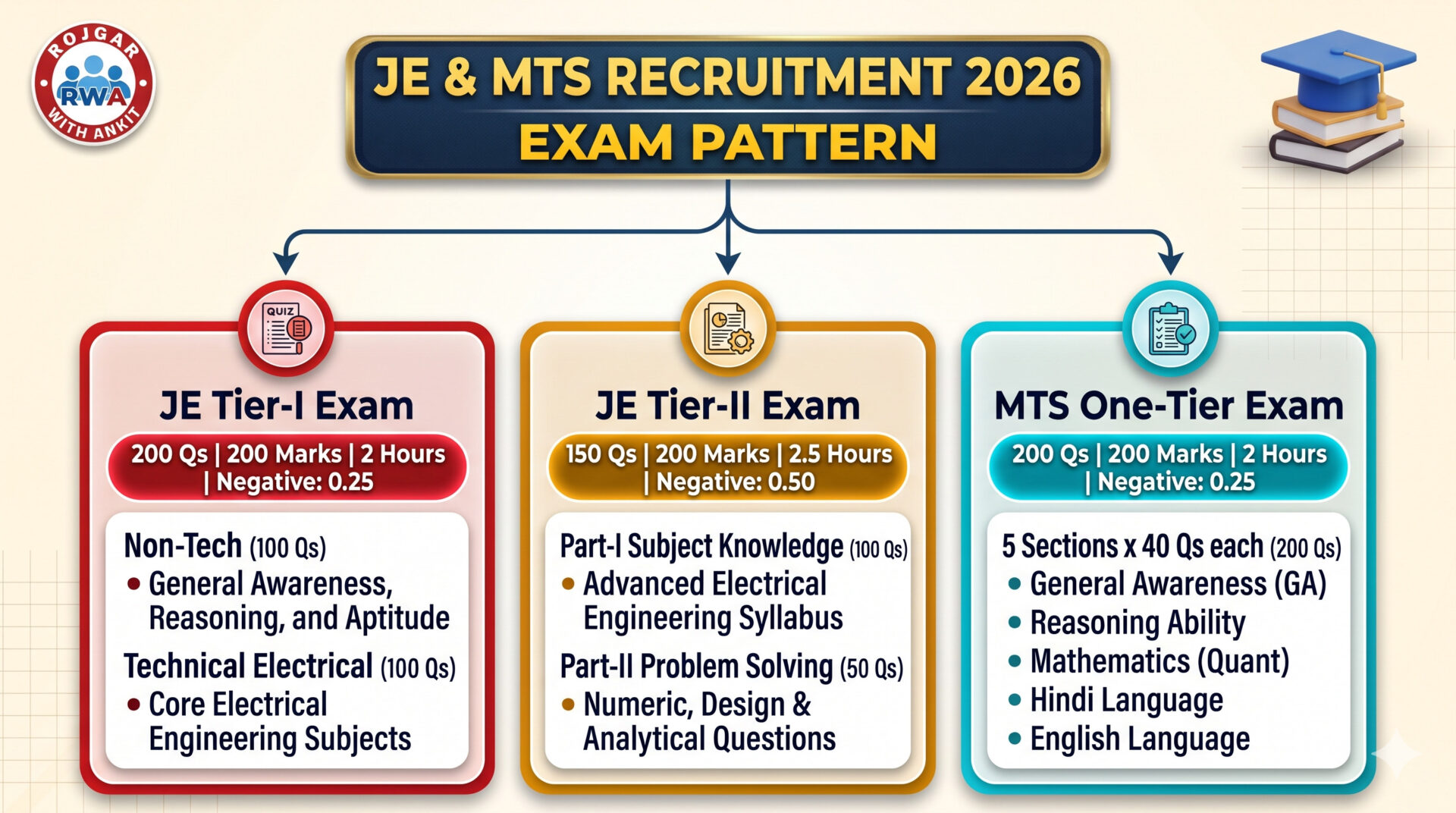
DSSSB Recruitment 2026 के लिए Junior Engineer और MTS Posts का Selection Process अलग-अलग निर्धारित किया गया है। Junior Engineer के लिए Two-Tier Examination और MTS के लिए One-Tier Examination आयोजित की जाएगी।
- Online Application: Candidates को निर्धारित Dates के भीतर Application Submit करना होगा।
- Tier-I Examination (Junior Engineer): JE Candidates को 200 Marks की Tier-I Examination में Appear होना होगा।
- Tier-II Examination (Junior Engineer): Tier-I में Shortlisted Candidates को 200 Marks की Tier-II Examination के लिए बुलाया जाएगा।
- One-Tier Examination (MTS): MTS Candidates के लिए 200 Marks की Single Stage Examination आयोजित होगी।
- Answer Key & Objection Process: Examination के बाद Draft Answer Key जारी की जाएगी और Candidates निर्धारित समय में Online Objections Submit कर सकेंगे।
- Merit List: JE की Final Merit Tier-II Marks और MTS की Final Merit One-Tier Examination Marks के आधार पर तैयार होगी।
- E-Dossier & Document Verification: Shortlisted Candidates को Required Documents और Department/Post Preferences Submit करनी होंगी। Final Eligibility Verification संबंधित Department द्वारा की जाएगी।
DSSSB Recruitment 2026: Exam Pattern
DSSSB Recruitment 2026 के लिए Junior Engineer और MTS Posts की Examination Scheme अलग-अलग है। Candidates नीचे दी गई Tables में Subject-wise Questions, Marks, Exam Duration और Negative Marking Check कर सकते हैं।
Junior Engineer Tier-I Exam Pattern
| Section / Subject | Questions | Marks | Exam Duration | Negative Marking |
| General Awareness | 20 | 20 | 2 Hours | 0.25 Marks |
| General Intelligence & Reasoning | 20 | 20 | ||
| Arithmetical & Numerical Ability | 20 | 20 | ||
| Hindi Language & Comprehension | 20 | 20 | ||
| English Language & Comprehension | 20 | 20 | ||
| Electrical Engineering (Subject-Specific) | 100 | 100 | ||
| Total | 200 | 200 |
|
Junior Engineer Tier-II Exam Pattern
| Particulars | Questions | Marks | Exam Duration | Negative Marking |
| Part-I: Subject-Specific Knowledge | 100 | 100 | 2 Hours 30 Minutes | 0.50 |
| Part-II: Application of Concepts, Problem-Solving & Technical Understanding | 50 | 100 | ||
| Total | 150 | 200 |
|
MTS Tier-I Exam Pattern
| Subject | Questions | Marks | Exam Duration: | Negative Marking |
| General Awareness | 40 | 40 | 2 Hours | 0.25 |
| General Intelligence & Reasoning | 40 | 40 | ||
| Arithmetical & Numerical Ability | 40 | 40 | ||
| Hindi Language & Comprehension | 40 | 40 | ||
| English Language & Comprehension | 40 | 40 | ||
| Total | 200 | 200 |
| Question Paper Language: Hindi और English; Language Sections संबंधित Language में होंगे। |
Minimum Qualifying Marks
| Category | Minimum Qualifying Marks |
| General / EWS | 40% |
| OBC (Delhi) | 35% |
| SC / ST / PwBD | 30% |
| Ex-Servicemen | Respective Category से 5% Relaxation, Minimum 30% |
DSSSB Recruitment 2026 : Syllabus
DSSSB Junior Engineer (Electrical) / Section Officer (Electrical) का Syllabus Tier-I और Tier-II के लिए निर्धारित किया गया है। Tier-I Section-A में General Subjects और Tier-I Section-B तथा Tier-II Part-I & II में Subject-Specific Electrical Engineering Topics शामिल हैं।
Tier-I Section-A: General Syllabus
| Subject | Syllabus / Topics |
| General Awareness |
|
| General Intelligence & Reasoning Ability |
|
| Arithmetical & Numerical Ability |
|
| Hindi Language & Comprehension |
|
| English Language & Comprehension |
|
Tier-I Section-B & Tier-II Part-I and II: Subject-Specific Syllabus
| Subject | Syllabus / Topics |
| Applied Chemistry |
|
| Applied Physics |
|
| Applied Mathematics |
|
| Applied Mechanics |
|
| Fundamentals of Electrical Engineering |
|
| Engineering Drawing |
|
| Electrical Engineering Materials |
|
| Basics of Electrical Engineering |
|
| Basic Electronics |
|
| Digital Electronics and Microprocessor |
|
| Electrical Design Drawing |
|
| Generation of Electrical Energy |
|
| Network Analysis |
|
| Electrical Machines |
|
| Power Electronics |
|
| Electrical Instrumentation |
|
| Power System Protection |
|
| Power Quality and FACTS |
|
| Electrical Energy Conservation and Auditing |
|
| Power System Dynamics and Control |
|
| Transmission and Distribution |
|
| NOTE: CHECK DETAILED SYLLABUS FOR TIER-I AND TIER-II COMBINED EXAMINATION FOR THE POST OF JUNIOR ENGINEER (ELECTRICAL)/SECTION OFFICER(ELECTRICAL) |
DSSSB Recruitment 2026: Preparation Tips
- Focus on Electrical Engineering Concepts: Junior Engineer Candidates को अपनी Prescribed Qualification के अनुसार Core Electrical Engineering Subjects का Revision करना चाहिए। Tier-I और Tier-II दोनों में Subject-Specific Knowledge Important है।
- Prepare General Awareness and Reasoning: General Awareness, General Intelligence और Reasoning Ability के Questions की Regular Practice करें।
- Improve Numerical Ability: Arithmetic और Numerical Ability के Questions Solve करके Calculation Speed और Accuracy Improve करें।
- Practice Hindi and English Comprehension: दोनों Language Sections के लिए Grammar, Comprehension और Language-Based Questions की Practice करें।
- Avoid Negative Marking: 1 Mark वाले Wrong Answer पर 0.25 Marks और 2 Marks वाले Wrong Answer पर 0.50 Marks Deduct होंगे। इसलिए Blind Guessing से बचें।
- Attempt Full-Length Mock Tests: JE Tier-I और MTS Candidates को 2 Hours में 200 Questions Solve करने होंगे। Regular Mock Tests देकर Time Management Improve करें।
- Revise Important Topics Regularly: Examination से पहले Important Concepts, Formulas और Previously Studied Topics का Revision करें।
How To Download Admitcard
DSSSB Junior Engineer और MTS Recruitment 2026 के लिए Admit Card से संबंधित Updates Board की Official Website पर जारी किए जाएंगे। Candidates नीचे दिए गए Steps के माध्यम से Admit Card Download कर सकेंगे।
- Step 1: सबसे पहले DSSSB की Official Website https://dsssbonline.nic.in पर जाएं।
- Step 2: Admit Card जारी होने के बाद संबंधित Download Admit Card Link पर Click करें
- Step 3: Junior Engineer (Post Code 809/26) या MTS (Post Code 810/26) का संबंधित Examination Select करें।
- Step 4: Portal पर मांगी गई Login Details Enter करें।
- Step 5: Admit Card Screen पर Display होने के बाद उसमें दी गई Details Check करें।
- Step 6: Admit Card Download करके उसका Printout निकाल लें।
How To Download Result
DSSSB Recruitment 2026 के लिए Examination के बाद Result से संबंधित Updates Official Website पर उपलब्ध कराए जाएंगे। Candidates नीचे दिए गए Steps Follow करके अपना Result Check कर सकेंगे।
- Step 1: सबसे पहले DSSSB की Official Website https://dsssb.delhi.gov.in पर जाएं।
- Step 2: Website पर उपलब्ध Results Section Open करें।
- Step 3: Junior Engineer (Post Code 809/26) या MTS (Post Code 810/26) से संबंधित Result Link पर Click करें।
- Step 4: Result Notice या PDF उपलब्ध होने पर उसे Open करें।
- Step 5: Result में अपना Roll Number या अन्य संबंधित Details Check करें।
- Step 6: Result PDF Download करके Future Reference के लिए Save कर लें।
| Get the Latest Government Job News First! Join Us Now!! | |||
 |  |  | |
FAQs
| Q1. How many vacancies are available in DSSSB Recruitment 2026? |
| Answer: Advertisement No. 06/2026 lists 185 Junior Engineer vacancies and an MTS grand total of 1,260 vacancies. |
| Q2. What is the last date to apply for DSSSB Recruitment 2026? |
| Answer: The last date to submit the Online Application is 11 December 2026 (11:59 PM). |
| Q3. What is the educational qualification for DSSSB MTS Recruitment 2026? |
| Answer: Candidates must have passed Matriculation (10th Class) or an equivalent examination from a Recognized Board or Institution. |
| Q4. Is there negative marking in DSSSB Recruitment 2026? |
| Answer: Yes, 0.25 Marks will be deducted for each incorrect 1-Mark MCQ, and 0.50 Marks will be deducted for each incorrect 2-Mark MCQ. |
| Q5. What is the selection process for DSSSB JE and MTS Recruitment 2026? |
| Answer: Junior Engineer Candidates will undergo a Two-Tier Examination, while MTS Candidates will appear in a One-Tier Examination. |